Is It Just About the Money?
Chinese New Year aka Lunar New Year (or Spring Festival), is often described as a celebration of family, food, and fresh beginnings. It’s a time for reunion dinners, deep cleaning, new clothes and politely visiting relatives for reunion dinner. New Year is about resetting; clearing out bad luck, welcoming good fortune and starting again with a sense of optimism.
However one can’t help but notice the language of wealth becomes a huge part of the celebration. The color red represents good luck often used in the envelopes for gift money. The food signifies abundance and excess. Even the greetings themselves tend to focus more on prosperity. The most famous phrase “gong hei fat choi” is commonly treated in the West as meaning “Happy New Year.” When it actually means “congratulations, may you become wealthy.” It’s simply a wish for financial success.
Besides marking the beginning of the Lunisolar calendar, traditionally, Chinese New Year marks the hope for survival, stability and continuity. A tradition that connects to agrarian society since ancient times. Wishing someone wealth was never just about money in isolation, it was about food on the table, security for the family and protection against hardship. Thus, prosperity has evolved into a term representing overall well-being.
Once a year, the concept of wealth becomes a common New Year’s resolution for many individuals. Although it is rarely articulated, the intention is widely recognized. The primary objective focuses on achieving better fortune, and even those who face financial difficulties often express themselves with newfound assurance; embracing a new year that appears to assure being financially secure and successful.
Ritual and Symbol of Wealth
It’s easy to assume that all this talk of wealth is about materialism. But within the context of Chinese New Year, prosperity has always meant something broader and more practical. Historically, wishing someone wealth was really wishing them stability; enough food, enough warmth, enough security to get through another year without hiccups. The focus is to draw wealth and secure it.
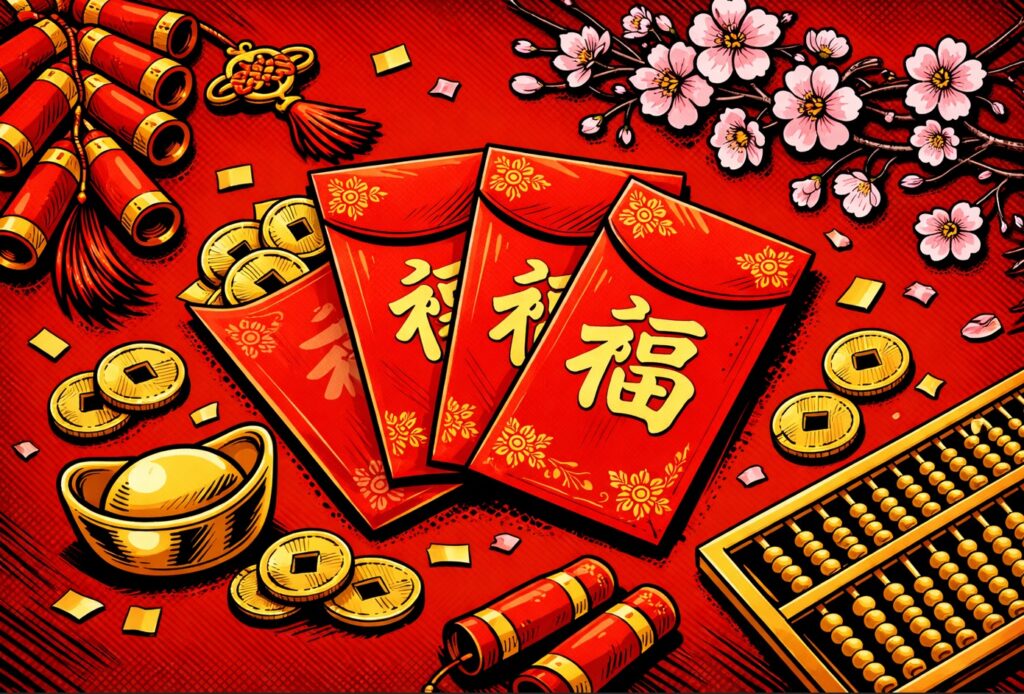
Take red envelopes or lai see (or hong bao in Mandarin). On the surface, it’s just money in a red packet, usually given by elders to children or unmarried relatives. But the red represents something auspicious. It symbolises luck, protection, and vitality, while the money inside represents the transfer of good fortune rather than payment. The amount matters socially, of course, but the gesture matters more. The money is not just a tip, it’s for giving you a headstart for the year ahead.
Then there’s the ritual of cleaning before the new year begins. Houses are scrubbed, cupboards emptied and clutter banished. This is more than just spring cleaning; it serves as symbolic clearance of all things negative. Bad luck is swept out to make space for incoming fortune. Cleaning ceases on New Year’s Day itself to avoid accidentally discarding good luck. Prosperity, as it turns out, requires the right conditions and space.
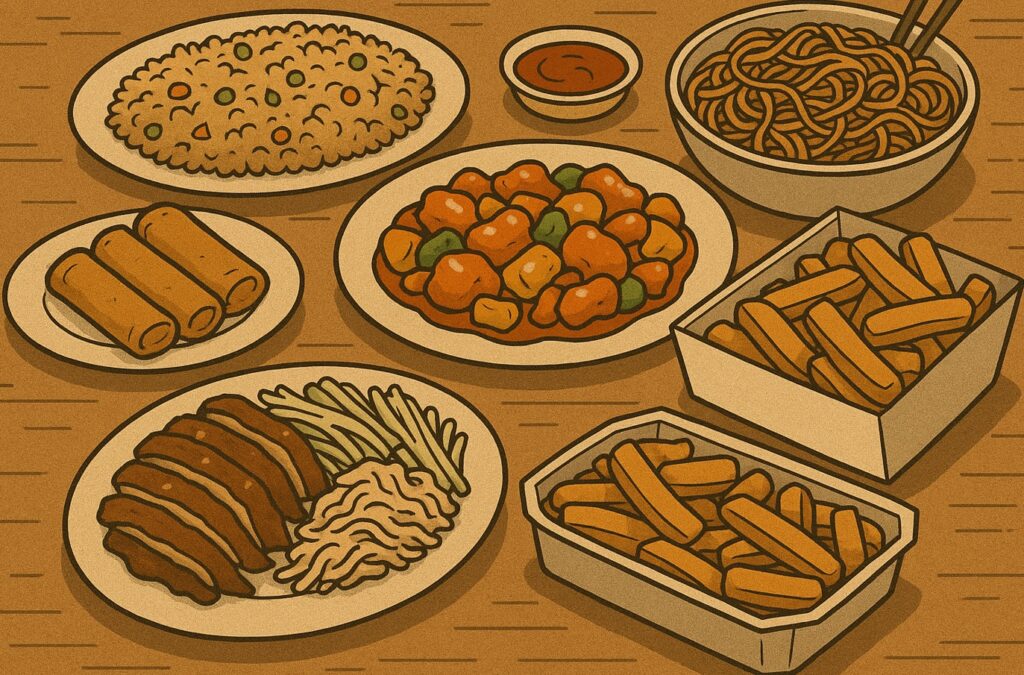
Food plays an equally important role. The reunion dinner is intentionally excessive, with dishes selected for their names as much as their flavours. Fish represents surplus. Dumplings resemble old gold ingots. Noodles promise longevity. Mandarin oranges signal wealth and good luck. While no one expects these foods to magically enhance one’s financial situation, together they create a language of abundance. Eating well serves as a signal that the year will be prosperous.
Even the noise has meaning. Firecrackers and loud celebrations were traditionally used to ward off evil spirits. Prosperity isn’t just something you attract; it’s also something you protect. Caishen (财神), the God of Wealth, is a prominent figure during Chinese New Year, symbolizing good fortune and financial opportunities. Typically shown in red robes with gold ingots, his image decorates businesses seeking a prosperous year. Just think of him as the Chinese equivalent of Santa Claus.
Taken together, these practices reveal something important. Wealth during Chinese New Year is more than just indulgence. It’s about continuity and the assurance that the household will go through another year of success.
What it means for the Chinese Community
When these traditions are brought to the UK by immigrants, the emphasis on prosperity is still strong. It’s easy to assume that all this talk of wealth is about materialism. However, in the context of Chinese New Year, prosperity has always encompassed a broader and more practical significance. Traditionally, wishing someone wealth was essentially wishing them stability; sufficient food, adequate warmth and enough security to navigate another year without calamity.
For numerous Chinese immigrant families, this concept is deeply ingrained. Wealth has historically symbolized safety rather than social standing. Prosperity serves as a form of emotional shorthand. Instead of directly expressing fear, stress, or uncertainty, these emotions are encapsulated within blessings and rituals. “May you become wealthy” subtly implies a longer sentiment: may you be safe, may your efforts yield results, may life be less challenging this year.
It’s proof that their sacrifices had led to something substantial. The gestures are modest and the optimism is intentional. Wealth is spoken not as a boast, but as a shared wish that the year ahead will be kinder, steadier and easier to navigate.
More Than Just Prosperity
Besides the language of wealth, prosperity is intricately linked to both health and longevity. Many of the foods, greetings and rituals circle back to that everyone stays well and hopeful. The celebration is also about family union and fostering relationships. The reunions, the visits, the effort to show up even when life is busy or complicated; these are reminders that family and cultural connection still matters.
For those in the diaspora, especially in the UK, the festival becomes a way of holding on to continuity. It links generations, preserves traditions and reinforces a sense of connection that can otherwise feel fragmented. There’s also gratitude threaded through it all. Gratitude for health, for family, for relationships that endure despite time and distance. Gratitude for the chance to start anew, even during hard times. Seen this way, wealth is only one part of a much larger picture. Underneath the prosperity talk sits a festival about wellbeing, connection and care. A collective reminder to look after one another as much as we look ahead into the future.